
MLE-Bench / MLS-Bench-style evaluation operations
Evaluate task completion, experiment reproducibility, method improvement and evidence of generalization.
Task understanding before scale
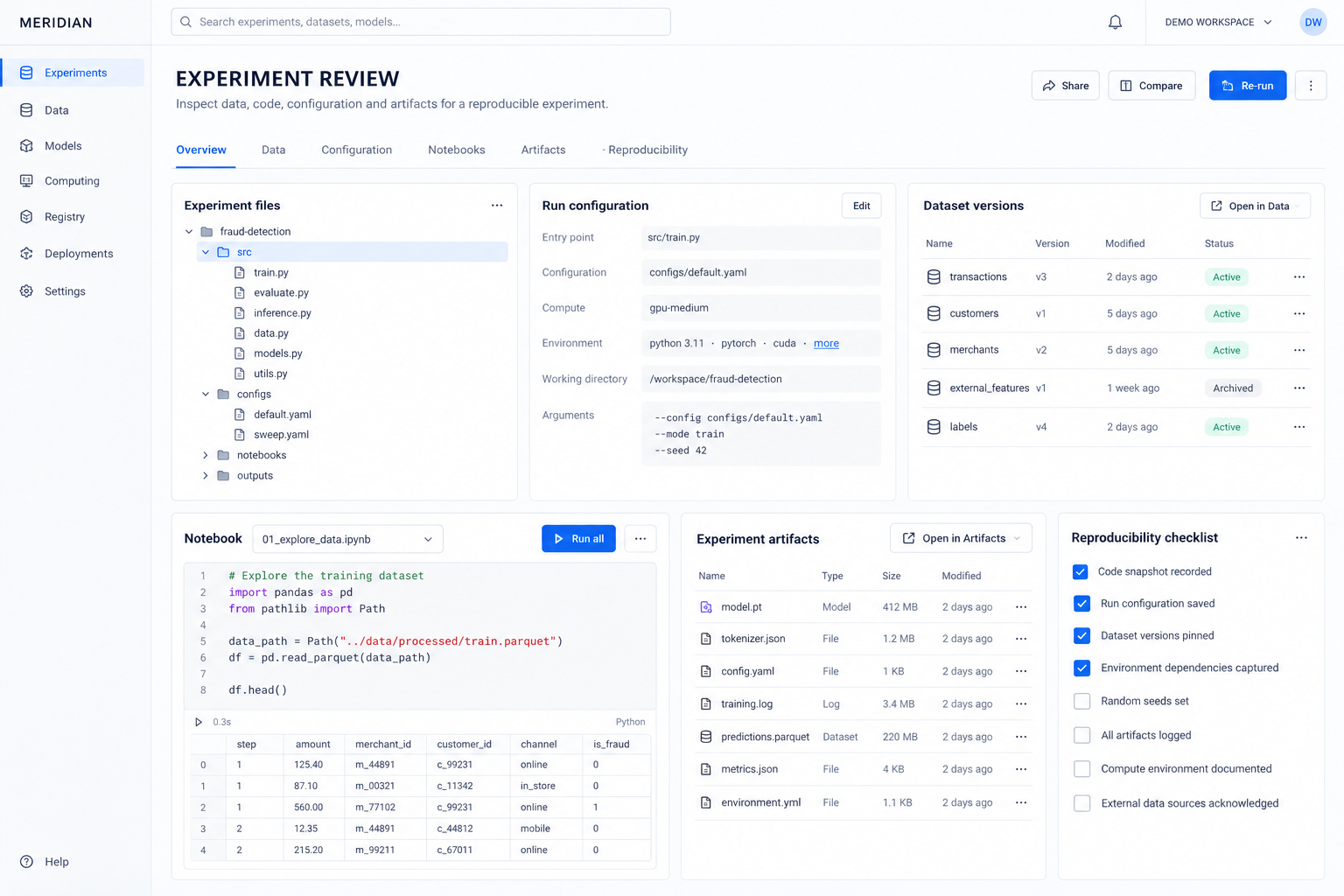
An ML-engineering evaluation needed to determine both whether candidates could complete the training task and whether claimed improvements would reproduce independently. We fixed data versions, container images, baselines, budgets, graders and artifact schemas inside each task pack. Run review covered logs, metric computation, ablations and cross-setting generalization, with critical claims rerun by an independent engineer in an isolated environment.
Task, environment, data and grader delivered together
Experiments and artifacts remain traceable
Engineering completion separated from scientific validity
One structure aligns the questions asked by model, data, procurement and security teams.
Evaluate task completion, experiment reproducibility, method improvement and evidence of generalization.
ML task packs with data, baseline, compute budget, grader and submission protocol
Environment locking, runs, artifact checks, scientific review and independent reruns
More than 420 experiment runs across three isolated environments and several accelerator profiles
Environment reproduction × ML expert review × independent rerun; Engineering completion separated from scientific validity
Task, environment, data and grader delivered together; Experiments and artifacts remain traceable; Critical-run reproduction exceeded 95%; metric anomalies remained traceable to logs, data or implementation
Client identity, original material and selected volumes are removed or banded. This brief explains delivery method and does not guarantee future results.
Review samples. Then define the task.
Carry this direction into your enquiry to confirm delivery, verification and sample scope.
Build data around your next capability goal
Start with a task goal and a sample. Define the materials, specialists, verification methods and delivery scope together.